



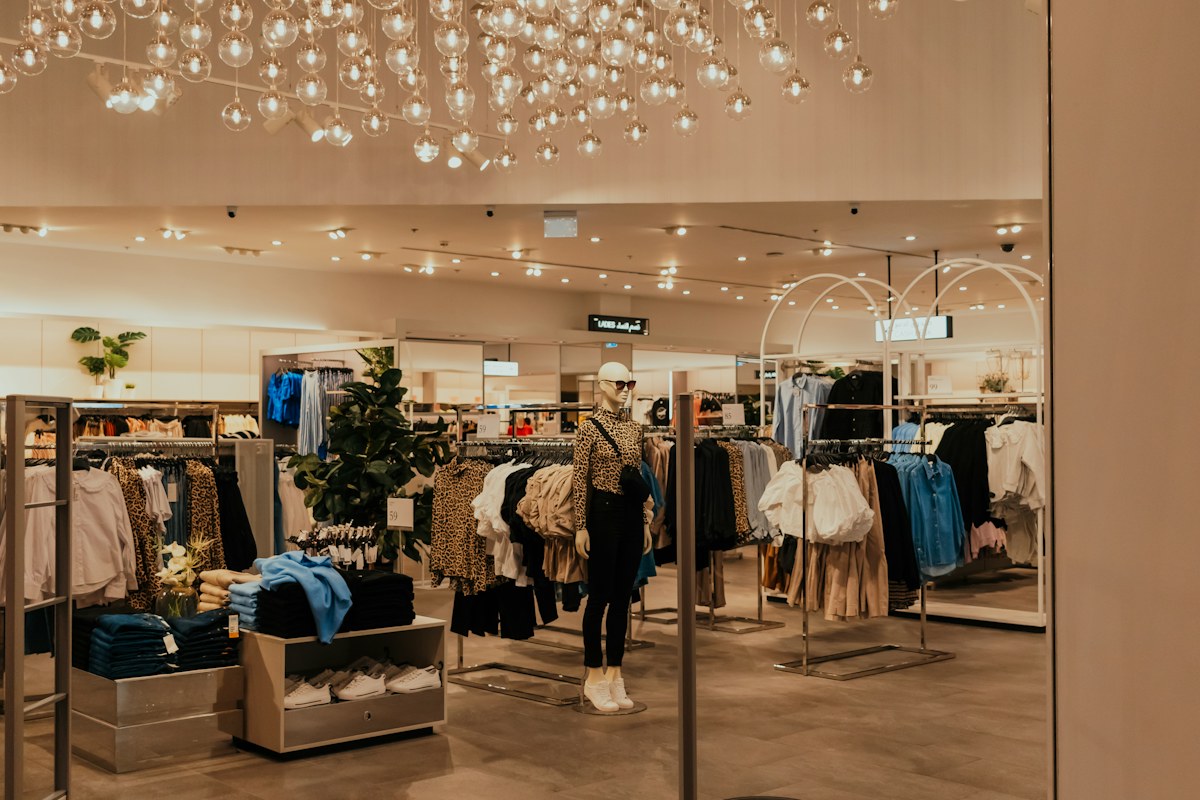
Entering the German Market Requires More Than Just a Distribution Agreement
As European consumer interest in Korean fashion continues to grow, an increasing number of independent designer brands and fashion·apparel startups are considering entry into the German market.
Some brands are expanding through their own online stores, while others are entering the market through German select shops or pop-up stores and then using Germany as a base for broader EU expansion.
However, compared with Korea, the German and EU markets impose significantly more detailed requirements in areas such as consumer protection, product regulation, and intellectual property.
This article summarizes six key legal issues that fashion and apparel brands should review before entering the German market.
Germany as a Strategic Entry Point for Korean Fashion Brands
Germany is the largest economy in the EU and one of Europe’s major consumer markets, with a population of approximately 84 million and strong purchasing power.
Berlin in particular serves as a hub for European fashion and culture, with a dense ecosystem of independent designer brands and concept stores.
Entering Germany can also make broader EU expansion easier from a logistics and corporate structuring perspective.
Key characteristics of the German market include:
- Strong e-commerce infrastructure: Germany is one of the largest e-commerce markets in the EU, with a well-developed B2C online sales environment.
- High level of consumer protection: Legal requirements relating to returns, refunds, withdrawal rights, and other consumer protections are strictly enforced.
- Strong offline retail ecosystem: Berlin, Munich, Hamburg, and other major cities have well-developed networks of independent select shops and concept stores, making them useful channels for building early brand awareness.
- Reference value for broader EU expansion: Sales performance in Germany can serve as a useful reference when negotiating with buyers in other EU countries.
Entering Germany is therefore not simply about expanding into one country.
It can serve as the foundation for building the legal, tax, and logistics infrastructure required for broader EU expansion.
Secure Trademark and Design Rights Before Market Entry
One of the most common disputes in the fashion and apparel sector involves prior trademark registrations.
If a brand name or logo already used in Korea has already been registered by a third party in Germany or the EU, the brand may be unable to enter the market under that name.
An EU Trade Mark (EUTM) application filed through the European Union Intellectual Property Office (EUIPO) can provide protection across all 27 EU Member States.
Fashion and apparel brands commonly file in:
- Class 25 for clothing, footwear, and headwear
- Class 18 for bags and leather goods
Even where no opposition is filed, the process may take approximately 8–11 weeks until publication, followed by a three-month opposition period, so advance filing is important when calculating the market-entry schedule.
For fashion and apparel, the appearance of the product itself may also be a core asset.
Through a Registered EU Design, brands can protect elements such as:
- clothing silhouettes;
- patterns; and
- accessory designs.
Unregistered EU designs may also receive limited protection for three years, but compared with registered designs, the date on which rights arose and proof of infringement can be more difficult to establish.
| Category | Scope of Protection | Duration | Notes |
| EU Trade Mark (EUTM) | Brand name and logo | 10 years, renewable | Effective across all 27 EU Member States |
| Registered EU Design | Product appearance and shape | Up to 25 years | Renewable every 5 years |
| Unregistered EU Design | Product appearance | 3 years from disclosure | No registration required, but heavier evidentiary burden |
Once a German market-entry plan becomes concrete, trademark and design applications should be reviewed in parallel.
Even before registration is completed, the filing date may become important in determining priority.
Mandatory Legal Requirements for Online Sales Channels
Where a brand sells directly to German consumers through its own online store, numerous obligations under EU e-commerce rules and German consumer law apply.
Impressum — Legal Notice
Under Section 5 of the German Digital Services Act (DDG), the website should provide readily accessible information including:
- company name;
- representative;
- address;
- email address;
- commercial registration information; and
- VAT ID, where applicable.
Failure to provide a compliant Impressum may expose the seller to an Abmahnung, or formal legal warning, from competitors or other eligible parties. This may lead to significant legal costs and damages.
Right of Withdrawal — Widerrufsrecht
EU consumers generally have the right to withdraw from an online purchase within 14 days after receiving the goods, without stating a reason.
If the seller fails to provide the required notice properly, the withdrawal period may be extended by up to 12 months and 14 days.
GDPR Compliance
Where a brand collects personal data from EU consumers, it must comply with the GDPR.
The website should therefore include an appropriate privacy policy covering matters such as:
- purposes of processing;
- retention periods; and
- third-party disclosures.
For serious violations, administrative fines may reach up to 4% of global annual turnover or EUR 20 million, whichever is higher.
Own Store vs. Marketplace
| Category | Own Online Store | Marketplace |
| Impressum | Must be prepared directly | Platform may handle part of the process, but seller information still required |
| Withdrawal Notice | Own terms must be prepared | Platform standard terms often apply, with limited customization |
| GDPR | Own privacy policy required | Need to distinguish platform processing from seller processing |
| Brand Control | High | Limited |
Key Legal Issues in Pop-Up and Select Shop Agreements
Entering the market through German select shops or department-store pop-ups can quickly increase brand awareness, but poorly structured contracts can create unexpected legal risks.
Two common structures are used.
Consignment Sales — Kommissionsgeschäft
Under a consignment structure, the retailer settles payment with the brand after a sale occurs.
The inventory burden may be lower, but if the retailer becomes insolvent, recovering unsold stock may become difficult.
Wholesale Supply Structure
Under a wholesale model, one of the most important issues is whether the agreement includes a valid retention of title clause (Eigentumsvorbehalt) under German civil law.
If the brand enters the market through a local sales agent or an exclusive distributor, Section 89b of the German Commercial Code (HGB) may also become relevant upon termination.
This provision can require compensation to a commercial agent where the supplier continues to benefit economically from the customer base developed by the agent after termination.
The statutory cap is generally based on up to one year’s average commission calculated over the preceding five years.
German case law has, in certain circumstances, applied similar principles by analogy to distributors (Vertragshändler) as well.
For this reason, pop-up and select shop agreements should not be treated as simple commercial arrangements. The following should be reviewed from the outset:
- contract term;
- settlement mechanism;
- exclusivity;
- inventory ownership;
- termination rights; and
- post-termination obligations.
EU Product Regulation and Labeling Requirements
Fashion and footwear sold in Germany must comply with applicable EU product regulations, regardless of whether the seller has a local German entity.
Textile Fiber Labeling
Under EU Regulation No. 1007/2011, textile products must disclose fiber composition in a form consumers can understand.
Selling products with only Korean-language labels may lead to requests for correction by customs authorities, marketplaces, or distributors, and may in some cases restrict sales.
General Product Safety Regulation — GPSR
The General Product Safety Regulation (EU) 2023/988, applicable since December 13, 2024, effectively applies to nearly all non-food consumer products, including fashion and textile products.
Where a Korean brand sells directly into the EU without an EU-established entity or importer, it should separately review whether it must designate an EU-based Responsible Economic Operator and display the relevant contact information.
REACH — Leather and Metal Components
Leather goods may need to comply with restrictions on hazardous substances such as:
- hexavalent chromium;
- azo dyes; and
- nickel release from metal components.
Where accessories or metal components are used, advance test reports should be secured where appropriate.
Children’s Products
General clothing and footwear are usually not subject to CE marking requirements.
However, children’s products may require separate review under:
- toy safety rules;
- drawstring safety standards; and
- regulations governing small parts and hazardous substances.
VAT and Import Duty Basics
VAT treatment differs depending on whether the goods are shipped directly from Korea to German consumers or stored in an EU warehouse before sale.
Direct Shipping from Korea — Import B2C
For low-value B2C consignments of up to EUR 150, the Import One-Stop Shop (IOSS) may simplify VAT reporting and payment.
Holding Inventory in the EU
Where inventory is stored in a German warehouse, the company should first determine whether German VAT registration is required.
If goods are then sold to customers in other EU Member States, the applicability of the One-Stop Shop (OSS) should also be reviewed.
Products exported directly from Korea to Germany may benefit from preferential tariff treatment under the Korea–EU Free Trade Agreement, provided the relevant rules of origin are satisfied.
A simple “Made in Korea” label is not sufficient by itself to establish preferential origin.
For commercial shipments above the applicable threshold, the exporter may need to satisfy specific approved-exporter requirements, and a EUR.1 certificate is not used as the standard proof of origin under the Korea–EU FTA framework.
| Category | Key Rule | Practical Point |
| VAT — Direct Shipping | Import B2C up to EUR 150 | Review IOSS |
| VAT — EU Inventory | German VAT registration may be required where goods are stored in Germany | Review OSS for sales to other EU countries |
| German VAT Rate | 19% standard rate, 7% reduced rate | Clothing generally subject to 19% |
| Import Duty | Depends on HS classification, with rates potentially reaching around 12% for certain textiles | Review Korea–EU FTA eligibility |
| Proof of Origin | Origin declaration / approved exporter requirements | EUR.1 is not generally used under the Korea–EU FTA |
Legal Structuring Before Market Entry Protects the Brand
Success in the German and EU fashion markets depends not only on product quality, but also on the level of legal and regulatory preparation.
With the GPSR now in effect, the overall compliance burden for brands selling through both online and offline channels has become more complex.
DECENT Law Firm’s Global Business Practice Team works with local German legal professionals to provide integrated support for Korean fashion and apparel brands entering the EU market, including:
- pre-entry legal review;
- trademark and design filing strategy;
- distribution and retail agreement review;
- product compliance and labeling review; and
- tax and VAT advisory coordination.
If your brand is preparing to enter the German or broader EU market, it is advisable to review the legal structure before launch.