



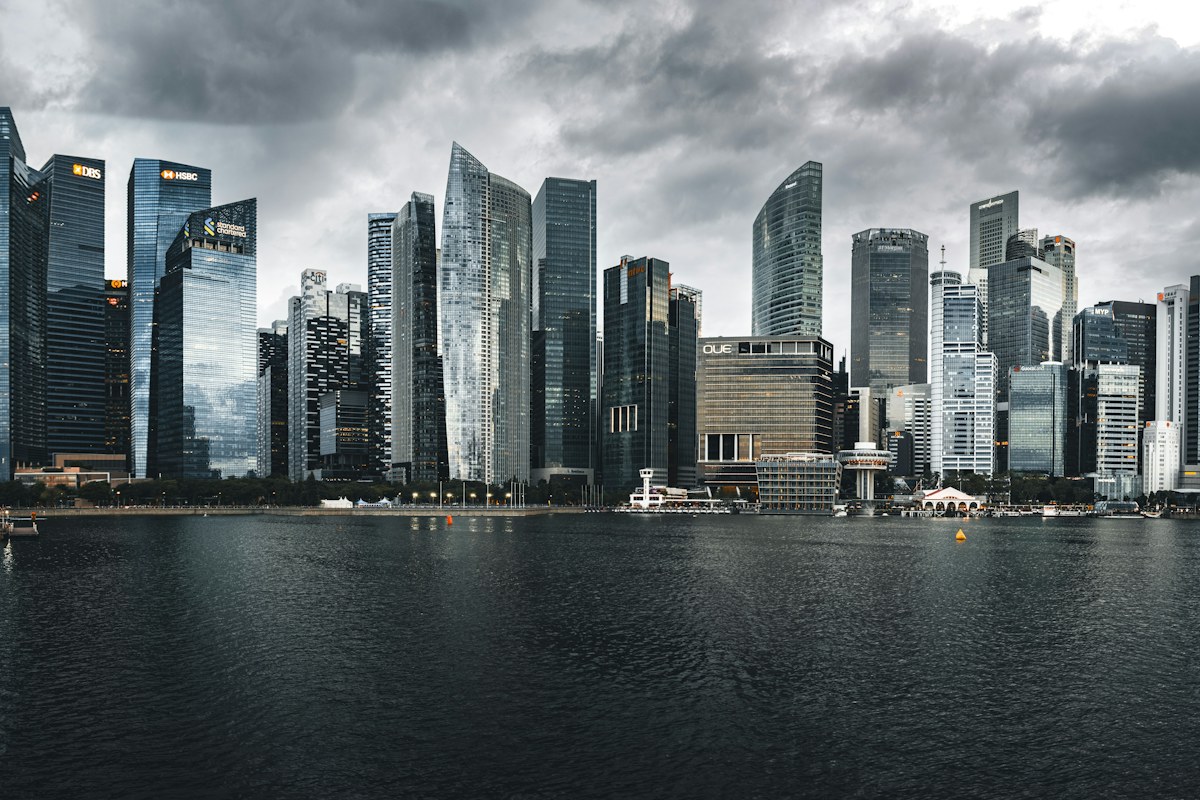
Some Korean digital asset companies assume that once they establish a Singapore entity and provide services only to overseas customers, they will fall outside Singapore’s regulatory framework.
However, the Monetary Authority of Singapore (MAS) has expanded the regulatory scope so that a Singapore entity may still require a separate licence where it provides Digital Token Services to customers outside Singapore.
1. Scope of the DTSP Licence
The Digital Token Service Provider (DTSP) licensing regime is implemented under Section 9 of the Financial Services and Markets Act 2022 (FSMA) and has been in force since June 30, 2025.
While regulations such as the Payment Services Act 2019 (PSA) may apply where a business provides services involving digital payment tokens or capital markets product tokens from Singapore, the DTSP regime may apply where a Singapore-based entity provides digital token services exclusively or primarily to customers outside Singapore.
Depending on factors such as:
- where the service is provided;
- where customers are located; and
- the legal characteristics of the token,
the applicable regime may differ between:
- the Payment Services Act (PSA);
- the Securities and Futures Act (SFA);
- the Financial Advisers Act (FAA); and
- the DTSP licensing regime.
Where a business already holds a licence under the PSA, SFA, or FAA for the same regulated activity, a separate DTSP licence may not necessarily be required for that same activity.
Tokens used solely for utility or governance purposes may also fall outside the relevant regulated-token categories, depending on their actual characteristics and use.
2. Background to the Introduction and No Transitional Period
The Monetary Authority of Singapore (MAS) first conducted a public consultation in July 2020 and published its response to the consultation in February 2022.
This was followed by a further consultation on the detailed regulatory framework in October 2024. After the final regulations were issued in May 2025, the DTSP licensing regime took effect on June 30, 2025.
No separate transitional or grace period was provided upon implementation. The four-week advance notice period before the effective date was intended as a final notification period rather than a formal preparation period.
Businesses that continue to provide digital token services exclusively to overseas customers without the required licence may be subject to criminal penalties and orders to cease operations.
3. DTSP Licensing Requirements
The DTSP licence is subject to the Financial Services and Markets (Digital Token Service Providers) Regulations 2025 and relevant MAS requirements.
Key requirements include:
| Item | Requirement |
| Minimum Capital | At least S$250,000 |
| Compliance Officer | A responsible compliance officer based in Singapore must be appointed |
| Directors / Senior Management | Prior MAS approval may be required for the appointment of key officers |
| Application Fee | S$1,500 |
| Annual Licence Fee | S$10,000, generally regardless of business size |
| Audit | Annual audit report to be submitted to MAS |
| Technology Risk Management | Recovery Time Objective of 4 hours for critical systems; total unscheduled downtime generally limited to 4 hours within any 12-month period; certain technology or cybersecurity incidents to be reported within 1 hour |
In addition, the business should maintain appropriate systems for:
- anti-money laundering and counter-terrorist financing;
- cybersecurity and technology risk management; and
- custody and protection of customer assets, where the business holds, manages, or transfers customers’ digital tokens.
Source: MAS DTSP licensing guidance and Financial Services and Markets (Digital Token Service Providers) Regulations 2025, as of July 2026.
4. DTSP Licences Are Expected to Be Granted Only in Exceptional Cases
MAS has publicly indicated that the licensing threshold for overseas-facing DTSPs is high and that licences are not expected to be granted as a matter of course.
Approval is expected to be limited to exceptional cases.
Applicants should be able to clearly demonstrate matters such as:
- legitimate commercial reasons for serving customers outside Singapore;
- an AML/CFT framework that meets international standards;
- transparent ownership and governance arrangements; and
- a credible and properly documented operating model.
A company may technically be able to incorporate in Singapore and submit an application, but the likelihood of approval can vary significantly depending on the quality and substance of the business model and supporting documentation.
If a company proceeds with incorporation without reviewing these issues first, the actual launch may be delayed or the licence application may ultimately be unsuccessful.
MAS does not prescribe a single standard processing period for DTSP applications, and the review timeline may vary depending on:
- the business model;
- completeness of the submitted materials; and
- whether MAS requests additional information.
5. Practical Issues to Review Before Entry
Before deciding on a Singapore structure, companies should first determine whether the token involved is:
- a digital payment token;
- a capital markets product token; or
- a utility or governance token that may fall outside certain regulatory categories.
If there is a realistic possibility of serving Singapore customers in the future, it may be more appropriate to consider the PSA / SFA / FAA licensing framework from the outset.
Companies that already hold a PSA or other Singapore financial services licence should also review whether a separate DTSP licence is actually required or whether there is regulatory overlap.
Korean residents or Korean corporations that hold shares in a Singapore entity may also need to review Korean-side reporting obligations, including:
- overseas financial account reporting;
- overseas direct investment reporting; and
- other applicable foreign exchange reporting requirements.
DECENT Law Firm’s Global Business Practice Team advises digital asset and fintech companies considering Singapore market entry on:
- regulatory classification of tokens and services;
- whether the business falls within the DTSP regime;
- availability and feasibility of licensing;
- corporate structuring;
- capital and compliance requirements;
- AML/CFT frameworks; and
- licensing applications.
Before establishing a Singapore entity, it is advisable to determine whether the proposed business model is regulated and which licensing regime applies.